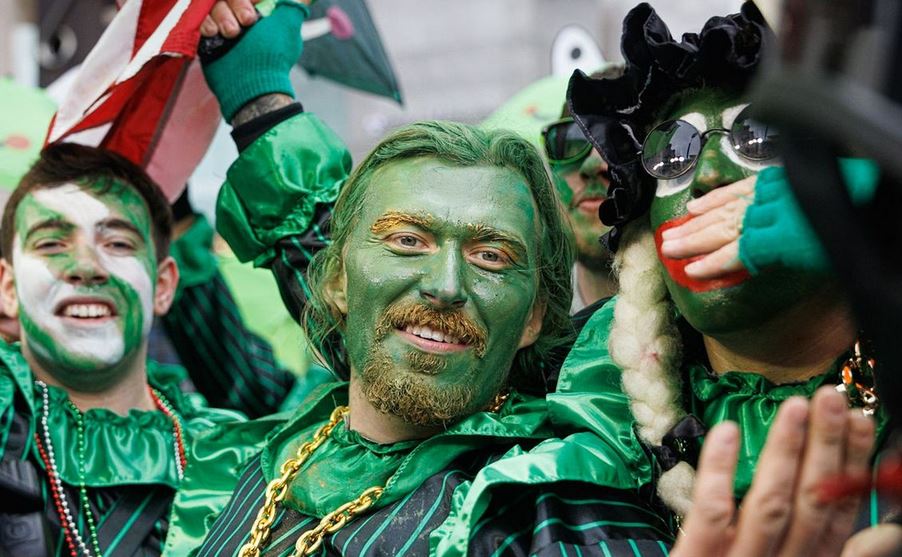
This grand celebration, which has evolved from rowdy street revelry into a world-class production, invites a closer look at the unique, sometimes contentious, but always resilient history of Mummery in the City of Brotherly Love.
From Medieval Masquerades to the Pepper Pot Rhyme
The tradition of "Mummery" is older than Philadelphia itself. Its roots trace back to ancient European harvest and winter solstice festivals, where masked actors would perform to ward off evil spirits. When immigrants—particularly the Swedish and Finnish—settled in the Delaware Valley in the 17th century, they brought their boisterous New Year's customs.
These early Mummer celebrations were simple, loud, and sometimes unruly. Groups of working-class men would "Mum" through neighborhoods between Christmas and New Year's Day, firing guns into the air, banging pots, and reciting doggerel poems as they went from house to house. The most famous request for hospitality led to the iconic "pepper pot" rhyme:
“Here we stand before your door, As we stood the year before; Give us whiskey; give us gin, Open the door and let us in. Or give us something nice and hot Like a steaming hot bowl of pepper pot!”
While the early 1800s saw the city attempt to ban the practice, the tradition was too deeply woven into the city's working-class fabric to be extinguished. The celebrations persisted, blending elements from German, Irish, and Italian immigrant communities, and growing in spectacle and satire throughout the 19th century.
The Official Start in 1901: A Taming of the Chaos
By the late 1800s, the uncoordinated street performances had grown chaotic and dangerous. In a move to organize the annual spectacle, the City of Philadelphia officially sponsored the parade on January 1, 1901, offering permits and cash prizes for costumes and routines. This formalization marks the 125-year continuity celebrated by the 2026 parade.
With the city organization came the formalization of the competing divisions that define the parade today:
- Comics and Wench Brigades: These groups remain closest to the parade's satirical and raucous roots, lampooning current events, politicians, and pop culture with irreverent humor and over-the-top costumes.
- Fancies: Showcasing elaborate, glittering costumes and ornate production, the Fancies elevate the simple masquerade to theatrical art.
- String Bands: The musical heart of the Mummers, String Bands are unique in that they use only string, reed, and percussion instruments (no brass). Their performances have evolved from military drill formations to dazzling, choreographed Broadway-style routines.
A Historic Double Milestone in 2026
The 2026 parade is not just an anniversary; it's a launchpad for the city's celebrations surrounding America's 250th birthday. As String Band Association President Sam Regalbuto noted, it is a "momentous, historic double milestone."
The Live! Casino & Hotel Philadelphia Mummers Parade will be recognized by the "52 Weeks of Firsts" initiative as the first official Folk Parade in America, underscoring its historical importance. For fans, this year's spectacle promises one of the most dynamic line-ups in recent memory, featuring 1 Fancy Club, 10 Wench Brigades, 3 Comic Clubs, and 14 String Bands, all ready to perform their year-long labors in sequins and feathers.
The parade, broadcast live across the Delaware Valley, continues to be a unifying event that relies heavily on community support and corporate partnerships. To commemorate the 125th anniversary, fans can purchase limited-edition merchandise, including an exclusive holiday ornament and a Mummers plushie, on the new official website.
For 125 years, the Mummers Parade has embodied the grit, creativity, and celebratory spirit of Philadelphia, marking the turn of the calendar with a unique cultural expression that remains unmatched anywhere in the world. As the String Bands step off down Broad Street, they don the legacy of centuries of revelry, officially marching Philadelphia into its next historic chapter.
